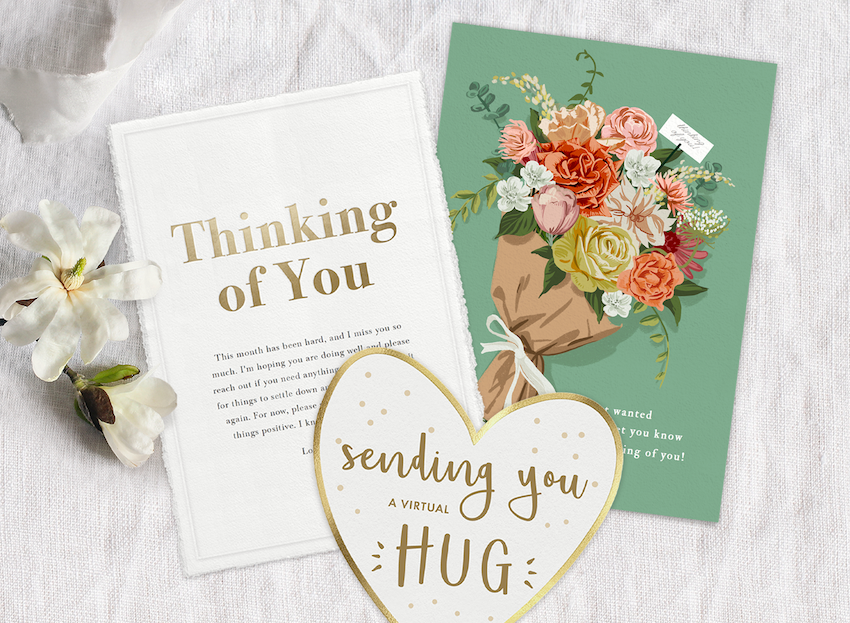
When someone you care about is grieving, it can be difficult to find words that express the condolences you intend to share. You may worry about saying too much, saying too little, or that your message will come across as generic or insincere.

Create Your Online Invitation
Design and send elegant, customizable digital invitations with real-time RSVP tracking — no time limit, no credit card required.
Get startedThe truth is, a sympathy card does not need to be perfect. It simply needs to remind someone that they are not alone. Whether you send a handwritten note, a traditional card, or an elegant digital sympathy card, your message can offer a meaningful moment of care during an incredibly tender time.
At a Glance
- If you are unsure what to say, a short note is still a meaningful gesture.
- Keep your sympathy message gentle, warm, and sincere.
- Acknowledge the loss directly with a phrase like, “I am so sorry for your loss.”
- If you knew the person who died, share a kind memory or quality you admired.
- Offer specific help, such as bringing dinner, walking the dog, or handling an errand.
- Avoid phrases that minimize grief, explain the loss, or assume how someone feels.
- It is thoughtful to follow up weeks or months later, especially around holidays, birthdays, and anniversaries.
A Simple Formula for Writing a Sympathy Card
If you are staring at a blank card, start with this gentle structure. You can use all four parts or keep it to just one or two, depending on your relationship.

1. Acknowledge the loss
Begin by naming the reason you are writing. This can be simple and direct.
- I am so sorry for your loss.
- I was deeply saddened to hear about the passing of your mother.
- Please accept my heartfelt condolences.
- My heart goes out to you and your family.
2. Offer comfort or care
Let the recipient know you are thinking of them, praying for them if appropriate, or holding them close in your heart.
- I am thinking of you during this painful time.
- Wishing you moments of peace and comfort in the days ahead.
- I hope you feel surrounded by love and support.
- You and your family are in my thoughts.
3. Share a memory, if you have one
A specific memory can be a gift. It reminds the grieving person that their loved one mattered to others, too.
- I will always remember your dad’s warmth and easy laugh.
- Your sister had such a generous spirit, and I feel lucky to have known her.
- I still think about the way your grandmother made everyone feel welcome.
- Michael brought so much kindness into every room he entered.
4. Offer support
Specific offers tend to be more helpful than open-ended ones. Grief can make it hard to ask for help, so a clear suggestion can ease that burden.
- I would love to bring dinner over this Thursday, if that would be helpful.
- I can pick up groceries this weekend.
- I am happy to take care of school pickup next week.
- I will check in again soon, but please know I am here to listen anytime.
Short Sympathy Card Messages
A brief message can be deeply meaningful. These are helpful when you did not know the deceased well, when the card already says a lot, or when words feel especially hard to find. For more options, our roundup of sorry for your loss messages can help you find the right tone.

- I am so sorry for your loss.
- Thinking of you with heartfelt sympathy.
- Wishing you comfort and peace.
- My heart is with you during this difficult time.
- Sending love and strength to you and your family.
- Please accept my deepest condolences.
- Holding you close in my thoughts.
- I am here for you, today and in the days ahead.
- Sharing in your sadness and sending love.
- May warm memories bring you comfort.
Sympathy Messages for a Close Friend
When you are writing to a close friend, it is natural to be more personal. You can acknowledge the weight of their grief while reminding them that your support is steady. For more inspiration, see our guide to a condolence message to a friend and additional words of comfort for a friend.

- I love you, and I am so sorry you are going through this. I am here for anything you need, whether that means talking, crying, or sitting quietly together.
- I know there are no words that can take this pain away. Please know I am holding you close and will keep showing up for you.
- Your loss is heartbreaking, and I am grieving with you. I will always remember how much joy and love they brought into your life.
- I am here for you in whatever way feels most helpful. I can bring dinner, run errands, or simply be with you.
- Take all the time you need. You do not have to move through this alone.
Sympathy Messages for a Family Member
Family grief can be layered, shared, and deeply personal. A sympathy message to a family member can acknowledge both the individual loss and the collective sadness.
- Our family will not be the same without them. I am so grateful for the memories we shared, and I am holding you close in my heart.
- We are mourning this loss together, and I hope we can find comfort in one another.
- Their love and presence shaped our family in so many beautiful ways.
- I feel lucky to have known and loved them, and I am so sorry for the pain you are feeling.
- I am here for you, and I will continue to be here as we remember and honor their life.
Sympathy Messages for a Coworker or Acquaintance
If you are writing to someone you know less personally, keep the tone warm, respectful, and concise. A polished card from our sympathy cards collection can carry the message gracefully.
- I am very sorry for your loss. Thinking of you and your family.
- Please accept my sincere condolences during this difficult time.
- Wishing you comfort, peace, and support in the days ahead.
- I was so sorry to hear about your loss. Please know you are in my thoughts.
- Our team is thinking of you and sending heartfelt sympathy.
- May you feel supported by those around you as you navigate this loss.
What to Write for the Loss of a Parent
Losing a parent can feel disorienting at any age, whether the relationship was close, complicated, or somewhere in between. Keep your message compassionate, and avoid assuming exactly how the person feels.

- I am so sorry for the loss of your mother. Her love, wisdom, and kindness will continue to live on through you.
- Your father was such a wonderful person. I feel grateful to have known him.
- I know how much your mom meant to you. I hope the memories you shared bring comfort in time.
- Your dad’s warmth and generosity touched so many people. He will be deeply missed.
- I did not have the chance to know your parent, but I know they must have been special to have raised someone like you.
What to Write for the Loss of a Spouse or Partner
The loss of a spouse or partner can change daily life in profound ways. Acknowledge the depth of the relationship and offer ongoing support. For more language ideas, see our sympathy messages for the loss of a husband.
- I am deeply sorry for the loss of your beloved partner. The love you shared was beautiful to witness.
- I hope you feel surrounded by care as you move through this unimaginable loss.
- Their love will always be part of your story.
- I know the days ahead may feel heavy and unfamiliar. Please give yourself grace, and know that I am here.
- I will always remember the way they looked at you with so much love.
What to Write for the Loss of a Child
There are no words that can soften a loss like this. In this situation, a simple, tender message is often best.
- There are no words for a heartbreak like this. I am so deeply sorry.
- Your child was so loved, and they will never be forgotten.
- My heart breaks for you and your family. I am holding you close in my thoughts.
- Their life, though far too short, mattered deeply.
- I am here for you now, and I will continue to be here in the weeks and months ahead.
What to Write After a Miscarriage or Pregnancy Loss
Pregnancy loss can cause deepest grief, even when others may not fully recognize it. A compassionate note can help validate the loss and offer meaningful support.
- I am so sorry for the loss of your baby. Please know that I am here for you.
- I know how much love you already had for this little one. I am holding you close.
- Please be gentle with yourself as you move through this loss.
- I am so sorry you had to say goodbye to the dreams you were already holding in your heart.
- I can bring dinner this week or sit with you if you do not want to be alone.
Try to avoid phrases like, “you can try again,” or “at least you already have children.” Even when meant kindly, they can make the loss feel minimized.
What to Write for the Loss of a Sibling
A sibling relationship can carry shared memories, identity, childhood, and history. Your note can recognize that unique bond.
- I am so sorry for the loss of your brother. I know how much he meant to you.
- Your sister’s light, humor, and kindness will be remembered by so many.
- I hope the memories you shared bring comfort when you need it most.
- Losing a sibling is a deep and personal grief. I am thinking of you and your family.
- I will always remember the stories you told about growing up together.
What to Write for the Loss of a Grandparent
A grandparent’s passing can bring sadness, gratitude, and reflection. If you knew them, mention a memory or quality.
- Your grandmother was such a warm and gracious person. I am grateful I had the chance to know her.
- I hope your memories of your grandfather bring you comfort and peace.
- Your grandparent’s love and legacy will continue through your family.
- I am so sorry for your loss, and I am sending love to you and your family.
What to Write for the Loss of a Pet
For many people, pets are family. Acknowledging that bond can be deeply comforting. Browse our roundup of pet sympathy cards for more thoughtful ideas.
- I am so sorry for the loss of your beloved pet. They brought so much joy and love into your life.
- You gave them a beautiful life, full of care and companionship.
- I know how much they meant to you. Their memory will stay with you always.
- Wishing you comfort as you remember all the happy moments you shared.
- I will miss seeing their sweet face, too.
What to Write After a Sudden or Unexpected Loss
When a death is sudden, the shock can make grief feel even more overwhelming. It is okay to admit that words feel inadequate. For more help finding the right phrase, see our collection of condolence messages.
- I am stunned and heartbroken by this news. I am so sorry for your loss.
- I do not have the right words, but I care about you deeply and am here for you.
- This is such a painful and unexpected loss. My heart is with you and your family.
- I cannot imagine what you are feeling, but I want you to know you are not alone.
- I will check in soon, and I am here to help with anything that feels useful.
What to Write When Someone Died by Suicide
When someone dies by suicide, avoid questions, judgment, or speculation. Focus on love, grief, and support for the person receiving your card.
- I am so sorry for this heartbreaking loss. I am holding you and your family close.
- There are no easy words for something this painful, but please know I care about you deeply.
- They were loved, and they will be remembered with tenderness.
- I am here to listen, without judgment, whenever you need.
- I will keep checking in, and you do not have to respond until you are ready.
Compassionate language matters. Many people prefer “died by suicide” rather than “committed suicide,” which can carry a sense of blame.
Religious Sympathy Messages
A faith-based message can be comforting when you know the recipient shares that belief. If you are unsure, choose a more universal message of care.
- Keeping you and your family in my prayers.
- May God bring you comfort and peace during this time of sorrow.
- Praying that you feel surrounded by love and strength.
- May their memory be a blessing.
- Wishing you peace, comfort, and the steady presence of those who love you.
What Not to Write in a Sympathy Card
Even thoughtful people can reach for phrases that unintentionally hurt. When in doubt, keep the focus on the grieving person’s loss, not on explanations or advice.
Try to avoid:
- I know exactly how you feel.
- Everything happens for a reason.
- At least they lived a long life.
- At least they are no longer suffering.
- You are strong, so you will get through this.
- You should try to stay busy.
- Time heals all wounds.
- They are in a better place – unless you know this aligns with the recipient’s beliefs.
Instead, choose language that acknowledges their grief and communicates your support:
- I am so sorry this happened.
- I cannot imagine how painful this is, but I am here.
- I am thinking of you with love and sympathy.
How to Offer Help in a Sympathy Card
A grieving person may not have the energy to identify what they need. Specific offers are often easier to accept.
Design: Signature GreenvelopeConsider writing:
- I can bring dinner on Tuesday or Thursday, whichever is better for you.
- I am going to the grocery store tomorrow and would be happy to pick up anything you need.
- I can walk the dog this week.
- I would love to help with school pickup or childcare.
- I can sit with you, help with thank-you notes, or simply listen.
- I will check in next week, and there is no pressure to respond right away.
If you offer help, choose something you can genuinely do. Small, reliable gestures can be a meaningful source of comfort.
Sympathy Card Closings
A warm closing gives your note a graceful finish. Choose one that feels natural for your relationship. If you are also looking for ways to lift someone’s spirits in the months ahead, our encouragement card guide pairs nicely with a follow-up note.
- With deepest sympathy,
- With heartfelt condolences,
- Thinking of you,
- With love and care,
- Holding you in my heart,
- Wishing you peace,
- With warm thoughts,
- Sending love and strength,
- In sympathy,
- With caring thoughts,
When to Send a Sympathy Card
It is thoughtful to send a sympathy card as soon as you can, but a late card is still meaningful. In the first days after a loss, families may be managing services, logistics, and immediate grief. Your card may be read quickly at first, then revisited later when the house is quieter.
You can also send a follow-up card weeks or months after the loss. This can be especially comforting around:
- The loved one’s birthday
- The anniversary of their passing
- Holidays
- Mother’s Day or Father’s Day
- Wedding anniversaries
- Family milestones
If a memorial gathering is being planned, you may also want to look at celebration of life invitations or memorial service invitations to help share the details with loved ones.
A simple follow-up note might say:
- I know your mom’s birthday is coming up, and I wanted you to know I am thinking of you.
- It has been a few months, but I have not forgotten. I am still here for you.
- I know the holidays may feel different this year. Sending love and comfort.
Sending a Sympathy Card When You Cannot Be There in Person

Sometimes distance, timing, health, or family circumstances make it difficult to attend a service or deliver a card by hand. In those moments, a thoughtfully designed digital sympathy card can help you reach out with care right away.
Greenvelope offers the beauty of traditional stationery with the ease of contemporary delivery, so you can send a personal message by email, text, or shareable link. Browse the full sympathy cards collection or our thinking of you cards for a gentle way to let someone know you are thinking of them, even when you cannot be physically present.
You might write:
- I wish I could be there to honor their life with you. Please know I am with you in spirit and holding you close.
- I am so sorry I cannot attend the service, but I am thinking of you and your family with love.
- Though I cannot be there in person, I am here for you in every way I can be.
Frequently Asked Questions
What is the best thing to write in a sympathy card?
The best sympathy message is sincere, simple, and centered on the grieving person. A good place to start is: “I am so sorry for your loss. I am thinking of you and your family, and I am here for you.”
Is it okay to keep a sympathy card short?
Yes. A short message can be very comforting. You do not need to fill the entire card. A few heartfelt lines are enough.
Should I mention the person who died by name?
In many cases, yes. Using their name can feel personal and meaningful. It acknowledges that their life mattered and that they are remembered.
Should I share my own grief experience?
It is usually best to keep the focus on the person receiving the card. If you mention your own experience, do so briefly and gently, without comparing losses or assuming you know exactly how they feel.
What if I am worried about saying the wrong thing?
Keep your message simple. “I am so sorry for your loss, and I am thinking of you” is kind, respectful, and enough.
A Final Note
Writing a sympathy card is not about finding perfect words. It is about showing up with care. Whether your message is a single sentence or a more personal note, the gesture tells someone that their grief is seen, their loved one is remembered, and they are not alone.
Lead with sincerity, keep your words gentle, and offer support in a way you can truly provide. In a difficult season, that simple act of connection can mean more than you know. When you are ready, browse Greenvelope’s sympathy collection to find a card that carries your message with grace.