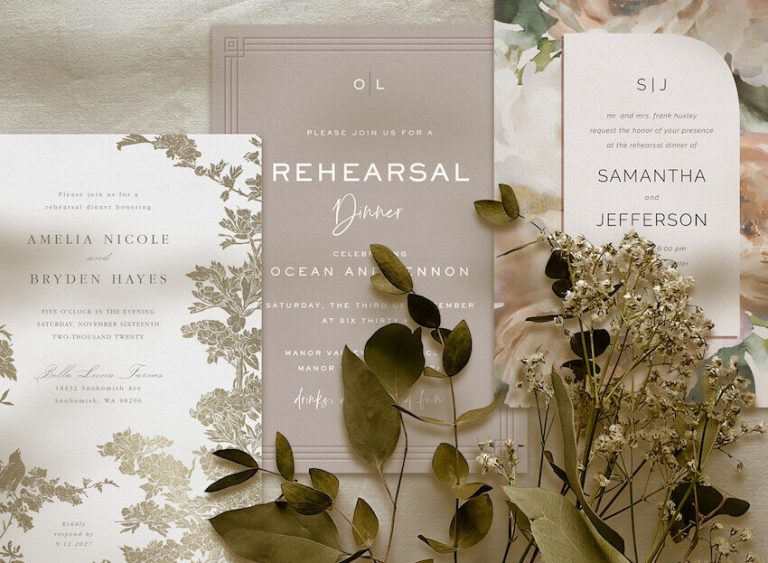
Figuring out who is invited to the rehearsal dinner can get complicated quickly. People with wedding invites aren’t always those going to a rehearsal dinner. Family dynamics, budget, venue capacity, and different expectations can all shape the guest list. The good news is that you can start with a core group and expand from there based on your plans.

Create Your Wedding Invitation
Design and send elegant, customizable digital invitations with real-time RSVP tracking — no time limit, no credit card required.
Get startedQuick Guide
- Start with the couple, immediate family, wedding planner, everyone participating in the ceremony rehearsal, as well as the wedding officiant.
- Consider out-of-town guests, close friends, mentors, significant others, and extended family based on your budget, venue capacity, and the kind of evening you want.
- Consider plus-ones for wedding party members and immediate family, and use the same approach for guests in similar situations.
- If the dinner needs to stay small, a welcome party or drinks gathering can give more guests a chance to celebrate.
- Let your preferences guide the final list, then adjust for family dynamics, cultural traditions, and the tone of your wedding weekend.
What Exactly Is a Rehearsal Dinner?
The rehearsal dinner traditionally happens soon before the wedding, right after a 30- to 60-minute ceremony run-through with the wedding officiant and wedding party at the ceremony site. Think of it as a short practice at the venue (Friday at 5:30 p.m., for example), then everyone heads to a restaurant, private room, or backyard for dinner.
Experts once framed this as a formal affair hosted by the groom’s family. That tradition is still common in some regions, but now couples often split costs, host more casual nights, or fold it into a welcome party for town guests who arrived early. Rehearsal dinners can be casual or formal, and that choice affects everything from guest count to food style.
The purpose is to thank the people most involved in the wedding planning, walk through logistics for the big day, and give family members and the wedding party time to connect before everything speeds up.
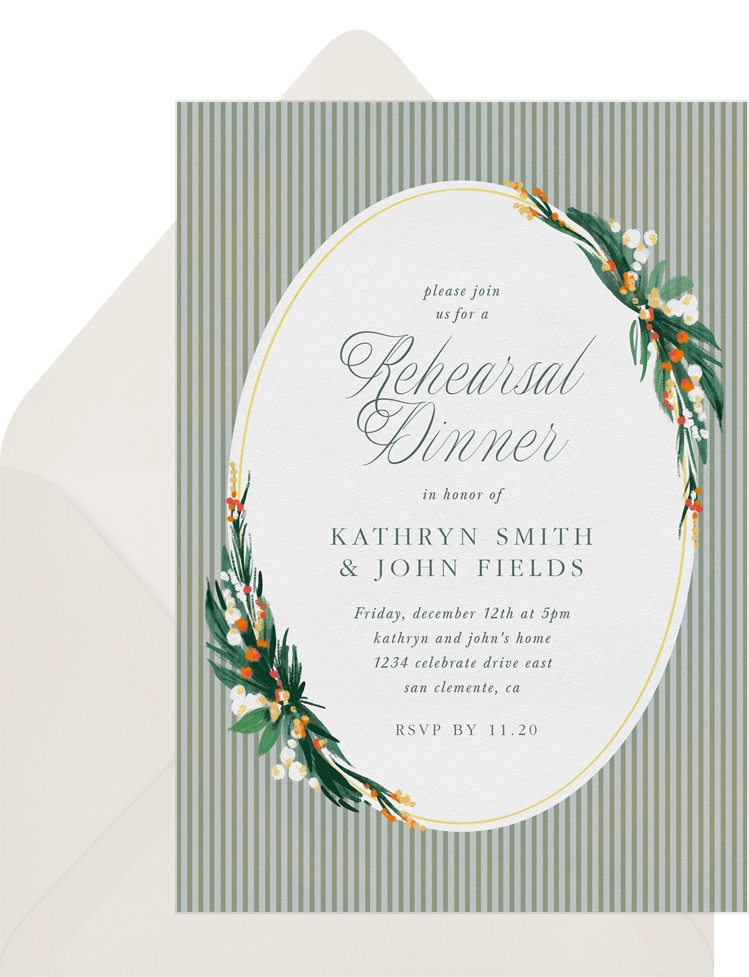
The Non-Negotiables: Who Is Definitely Invited
Your rehearsal dinner guest list starts with the people who must be at the ceremony rehearsal itself, plus the couple’s closest family members. Rehearsal dinner sizes typically range from 15 to 50 guests, and this core group usually accounts for 15 to 30 of them.
Here are the people to consider first:
- Immediate family members: parents, stepparents, and siblings of both partners, along with their spouses or significant others.
- Wedding party members: maid or matron of honor, best man, bridesmaids, groomsmen, ushers, readers, and other attendants participating in the rehearsal.
- The wedding officiant, whether that person is a religious leader, a judge, or a close friend. If the officiant has a partner, consider including them, too.
- Parents of young attendants, such as a flower girl or ring bearer, particularly if they need to bring their children to the rehearsal.
If someone is participating in the rehearsal, it is considerate to include them in the dinner that follows.
Immediate Family and Extended Family Members
The couple’s immediate family members, including parents, stepparents, siblings, and grandparents, are often the first people to add. In a blended family, consider the relationships that matter most to you and make your approach as consistent as possible.
Grandparents may be especially meaningful to include, particularly when they are traveling for the celebration. Many couples treat them much like parents when building the guest list.
Extended family includes godparents, aunts, uncles, and cousins, who can be invited based on closeness rather than obligation. Think about the relationships that are meaningful to you instead of inviting people simply because of their title.
If you are inviting extended family selectively, consider how your choices may be perceived by relatives who are not included. A consistent approach can make those conversations easier.
Your Wedding Party, Plus-Ones, and Kids
Wedding party members are typically included because they participate in the wedding rehearsal and play a central role in the ceremony. This includes the maid of honor, best man, ring bearer, flower girl, bridesmaids, and groomsmen.
Consider including the partners of wedding party members, especially spouses, fiancés, and long-term partners. Consistency can help you avoid awkward situations among guests in similar circumstances.
If your budget is tight, you could keep dinner limited to people involved in the rehearsal and invite partners to join later for dessert or drinks.
Children participating in the wedding, such as flower girls, ring bearers, junior bridesmaids, and junior groomsmen, can also be included. If they will attend, an earlier start can make the evening easier. You can also decide whether your rehearsal dinner will follow the same child-free or child-inclusive approach as the wedding.

Out-of-Town Guests and Other Special People
Out-of-town guests or other close family members may appreciate being included, especially if they have traveled a long way to celebrate with you. Inviting them can be thoughtful, but you do not need to include every traveling guest if the dinner needs to stay small.
If including every traveling guest would push the headcount past your venue’s capacity, consider a smaller group of guests who are especially close to you, such as traveling grandparents, godparents, or longtime friends.
Another option is to keep the rehearsal dinner intimate and host a separate welcome party afterward. A bar, hotel lounge, or rental house can give traveling guests a chance to connect without expanding the dinner headcount.
You might also include people who are not part of the wedding party but have played an important role in your life, such as a mentor, longtime neighbor, religious leader, or close friend. These invitations can be meaningful for smaller, more personal weddings.
Who You Don’t Have to Invite
It can be difficult to narrow the list when family members have their own ideas about who should attend. Remember that your budget and venue capacity place boundaries, and a rehearsal dinner does not need to include everyone invited to the wedding day.
If you need to keep the list smaller, you could leave out:
- Coworkers who are not in the wedding party or especially close to you.
- Distant relatives you rarely see.
- Friends of your parents who do not have a close relationship with you or a role in the wedding.
- Some out-of-town guests. A welcome brunch, coffee meet-up, or drinks event can give them a chance to feel included without expanding the dinner.
You additionally do not have to offer a plus-one to every rehearsal dinner guest. Consider prioritizing spouses, fiancés, and long-term partners of the wedding party and immediate family. If someone asks, you can explain that you are keeping the evening small because of your plans the night before the wedding.
A little consistency can make the guest list easier to manage and help everyone understand the plan.
How to Build and Communicate Your Rehearsal Dinner Guest List
A simple way to build the rehearsal dinner guest list is to work in this order:
- Start with the couple, immediate family, and wedding party.
- Add the officiant and parents of young attendants.
- Consider out-of-town guests, close friends, and other special people, such as mentors.
- Refine the list based on your budget, venue size, and preferred atmosphere.
Decide on a target headcount early. Your rehearsal dinner guest list number will depend on your venue, budget, and family size, so use those factors to set a realistic range rather than trying to hit a standard number.
For timing, send rehearsal dinner invitations with enough notice for guests to make plans. If you are including the dinner with your wedding invitations, a separate mailed card, or a digital invitation, make the guest list clear. Naming guests, including partners and children where relevant, can help avoid confusion.
Match the tone to your wedding weekend. A formal wedding might call for a coordinated but slightly more relaxed dinner, while a casual wedding could pair naturally with a backyard barbecue or taco night.
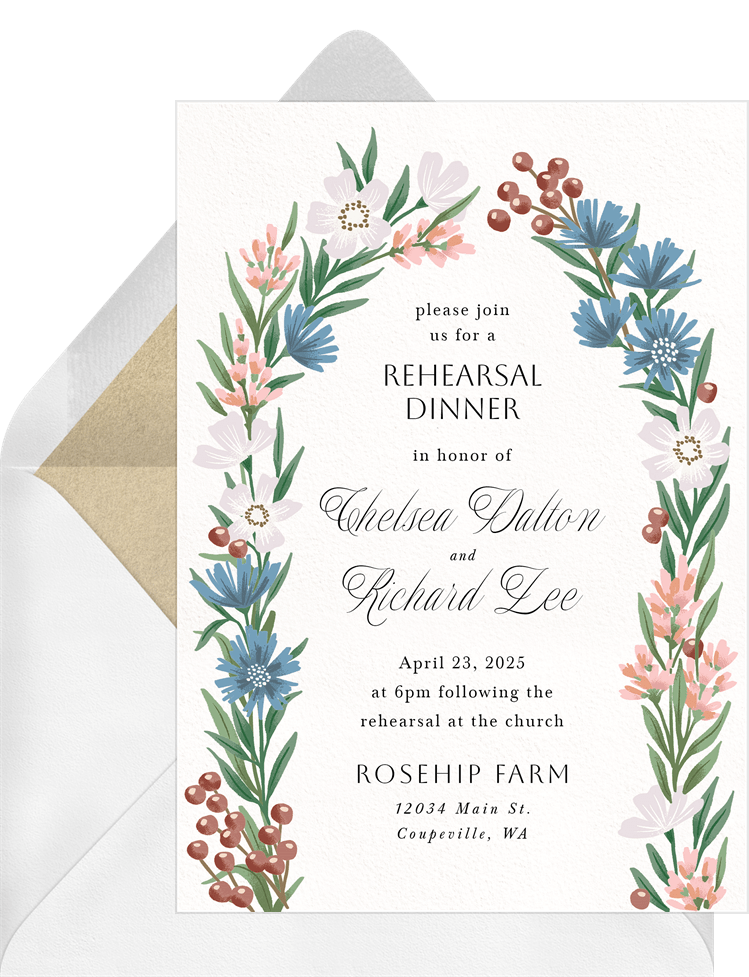
Make Your Rehearsal Dinner Invitations Easy to Manage
Once you have your guest list, the next step is making the details easy for everyone to find. A digital invitation can keep the rehearsal dinner information, RSVP details, and guest list organized in one place, while giving you room to create an invitation that fits the tone of your wedding weekend.
With Greenvelope, you can choose a rehearsal dinner design, send invitations digitally, track RSVPs, and manage guest details without juggling separate paper responses. Guests can respond online, while you get a clearer view of who is coming as you finalize the menu, seating, and other plans.
If you want a polished invitation without adding more paper and postage to your wedding planning checklist, consider using Greenvelope for your rehearsal dinner invitations.
Rehearsal Dinner FAQs
Do rehearsal dinner guests need formal invitations, or is an email enough?
Let the formality of your wedding weekend guide the format. A black-tie hotel wedding pairs well with printed rehearsal dinner invitations or an insert card. A backyard Saturday wedding? A clear email or group message works fine. Either way, include the date, exact time for the ceremony rehearsal and dinner, address, dress code, and RSVP deadline. Clarity matters more than stationery.
What if our families disagree about who should be invited?
Agree privately as a couple on a maximum headcount and budget before involving parents or other family members. Frame any pushback around concrete limits: “the room holds 32 people” or “we can host up to 25 guests comfortably.” If parents want to include extra relatives, offer a compromise event like a welcome drinks hour or next-day brunch so those people are still acknowledged.
Can we skip the rehearsal dinner entirely?
No rule requires one. Elopements, micro-weddings, and courthouse ceremonies often do fine without a rehearsal dinner. If the ceremony involves a processional, recessional, or complex readings, hold at least a brief run-through with the wedding party and officiant, then follow it with nothing more than snacks and a quick toast if the budget is tight.
Do we have to give toasts or gifts at the rehearsal dinner?
Speeches and gifts are traditional but optional. Many couples give wedding party gifts and parent gifts at the rehearsal dinner because the group is smaller. A simple structure: a welcome toast from the host, optional words from parents, then one or two short speeches from the best man or maid of honor. A quick thank-you from the bride and groom is plenty if you prefer to keep the night relaxed.
How late should a rehearsal dinner run the night before the wedding?
Start the wedding rehearsal late afternoon (5:00 to 6:00 p.m.), plan a 60- to 90-minute meal, and aim to wrap formalities by 9:30 p.m. Ending on the earlier side keeps the couple and wedding party rested, especially if hair, makeup, or photos start early the next morning. Any late-night socializing can happen at a hotel bar or nearby spot, with a friendly reminder that everyone has a big day ahead.